


BACKGROUND
How I ended up here - and why it couldn’t have gone another way
People sometimes look at what I’m building now and ask how music, technology, and health ended up in the same sentence.
For me, it never felt like a leap.
It felt like a long walk - one that taught me,
again and again, that truth only shows up when systems are under pressure.
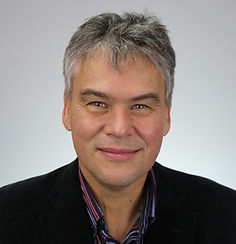
Heiko Schmidt
YOUTH

How Bach, Beethoven, and Bruckner
became my babysitters
My late parents were classical musicians.
When I was young and they couldn't find a babysitter, they took me to rehearsals of their top-level German Symphony Orchestra in Leipzig.
Spending so many hours listening to classical music and having my father teach me at home, I started playing the piano when I was 5 years old.
My parents managed to get me the best teachers, and as a result, I was able to compete internationally, and ranked #7 of the renowned International Bach Music Contest twice, at the ages of 8 and 12.
With that success, I transitioned into my journey of 21 years of musical education at special schools in Leipzig and Halle and 5 years of scientific studies, eventually earning a "Diplom Tonmeister" Master's degree in Art, Science and Engineering from the Hochschule für Musik and the Academy of Science in Berlin, Germany.
Gewandhaus Leipzig - picture credit to www.gewandhausorchester.de and Jens Gerber
SERENDIPITY
How an Empty Studio, a Diploma Paper, and Late Night Work Changed Everything
While in my final year at university, I began writing and producing songs as part of my studies. Together with my close friend Helfried, also a Tonmeister student, I co-wrote my diploma thesis on the construction and technical design of the newly built Popstudio (Studio P) at the Funkhaus Nalepastraße in East Berlin.
Built between 1986 and 1989, the studio was a state-of-the-art facility for modern pop production. Because our academic work focused on its room-in-room architecture, acoustics, and semi-automated systems, we were granted rare access to a space that was otherwise closed to the public.
During that time, I met Katharina. I asked her if she would help me by singing the vocals for my student project. She told me she couldn’t sing and wouldn't want to be an artist - but then helped me anyway.
Over time, she recorded vocals for more than twelve songs, simply because she believed in the work.
During one of those sessions an influential executive producer walked in, loved it, insisted on promoting the unfinished track to radio DJs, and after an overwhelming response and a final mix, turned it into a Top-10 radio hit within four weeks in 1989.

Katharina later became my life and business partner for more than 38 years.
After three decades, three incredible children, and a life lived across continents, we finally got married - quietly, at our little Malibu United Methodist Church, back home in Malibu, California on the day of our 30th anniversary.
RECKONING
How I Learned That Royalties Don’t Audit Themselves
After fleeing the Iron Curtain from Russian-occupied East Germany via Hungary to Austria in early August 1989, I found myself starting over. Not long after, I became a TV producer at ZDF, Europe’s largest television broadcaster.


our first HQ 1999 was a small studio in Calabasas, CA - close to the Calabasas Commons
My first real breakthrough came in the mid and late 1990s through the music companies I built. After initial success, I moved the business from Europe to California and gradually expanded it to Japan, Australia, and later to Canada. What began as creative work quickly turned into a global operation.
In the early 2000s, the international music business was at its financial peak.
Life was good. Yet while running record labels, music publishing companies, artist management, and production firms, I noticed something deeply wrong: roughly two-thirds of our projected international royalty income was disappearing. Not because the music wasn’t successful, but due to human error, broken licensee systems, and, in some cases, outright international tax fraud.
Losing millions of dollars was not an option.
So I went looking for answers.
For nearly two years, I was almost non stop traveling, meeting partners, licensees, administrators, and collecting societies around the world, trying to understand where the money was leaking and why.
Out of that process, I built a forensic international accounting system and established our own licensing hubs and publishing entities in multiple countries.
The impact was immediate and measurable. In Japan, our largest market at the time, we saw a 3.5x increase in revenue for our own catalogs. When we later offered this system as an administrative publishing service, some partner catalogs increased their revenues by up to 70x.
I continued to scale. And after moving to California and over time, this evolved into a global licensing network with more than 300 partners across 35 countries and, as of today, over 7,000 music-related deals negotiated.


But knowing how the system works does not mean the major players automatically comply. So I had the rare pleasure of litigating these practices all the way up to the highest courts and winning. Multiple times.
OLG Berlin, Germany
Those lawsuits became part of German legal literature and ultimately contributed to changes in German copyright law. Today, songwriters, producers, and artists are legally allowed to terminate their contracts if royalty accounting is inaccurate.
Just as important, it became a journey shaped by people.
Along the way, I met, signed, managed, and learned from extraordinary creative talent, sharp business minds, and colleagues who continue to shape how I think and work to this day.

As Parasongs International’s data-driven, forensic international royalty system began identifying significantly undervalued music-publishing assets, I convinced two private-equity firms, Lloyds Development Capital in London and Bank of America Merrill Lynch in New York, to co-sponsor a strategy to acquire, aggregate, enhance, and ultimately exit music-publishing catalogs.
With approximately USD 300 million in equity commitments and an additional USD 250 million in debt guarantees from UBS and Credit Suisse, I spent nearly two years building a global M&A pipeline: identifying and pre-negotiating more than 2,000 potential targets, advancing over 200 into pre-due diligence, approximately 20 into detailed due diligence, and three into fully backed final bids.
Although none of the acquisitions ultimately closed - outmatched in auctions by far larger players such as KKR and major pension funds, with significantly lower costs of capital and teams dedicated solely to closing - this period became the most intense and formative learning experience of my life.
Along the way, and without regret, I lost meaningful money to failed deal fees, but gained something far more valuable: deep institutional knowledge, hard-earned perspective, and lasting friendships with exceptional people.
I remain grateful to the late Joel A. Katz, whose belief in me and guidance meant more than he ever knew. His life’s work was defined by integrity, trust, and service to others, and he will be remembered for the good he quietly made possible.
FORGED
When Everything Finally Clicked
While analyzing the financial data of potential catalog acquisitions, a pattern slowly became impossible to ignore:
Hit songs are extremely well monitored and managed. No matter how clever a buyer is, these assets rarely offer dramatic upside. At best, you might double the revenue. A solid result - but fundamentally limited.


At the other end of the spectrum sat something entirely different.
Tens of millions of songs earning little or nothing each year - 99% less than twenty dollars - weren’t failing creatively. They were failing economically. The cost of a single human work hour exceeded their annual revenue, which meant no one actively managed them. Touching them would lose money.

That was the moment everything finally clicked:
The problem wasn’t talent.
It wasn’t demand.
It was unit economics.
Instead of chasing marginal gains from already optimized hit songs, I asked a different question:
What if administration itself could be automated - and incentives redesigned - so the vast majority of existing music, what I called “orphan songs,” could finally participate in the market?
The result was Gideen — a fully automated record label and music publishing system designed to reduce administrative costs to near zero and align incentives through a shared-economy model involving creators, curators, and licensors.
The idea wasn’t to compete with major publishers.
It was to make the invisible visible. Songs that had effectively disappeared from the economic system could now be monitored, matched, and licensed into smaller but meaningful opportunities - videos, film, television, brand content - at scale. Individually modest. Collectively transformative.
In 2014, this work received the #1 Innovation Award at the MusicTech Summit in San Francisco.
Commercially, however, it failed.
Not because the system didn’t work - but because it was early. The surrounding infrastructure wasn’t ready. Distributed ledgers were immature. Shared-economy models were still viewed with skepticism. The timing was wrong.
That, too, was a lesson.
Today, many of the missing pieces exist. Automation is expected. Incentive alignment is better understood. I’m convinced that a new generation of entrepreneurs will eventually pick up this idea again - and make it work.
For me, this chapter mattered less for its outcome than for its clarity.
I had learned how to design systems that don’t just reward the top of the market, but give the long tail a chance to exist at all.
That insight would later prove far more valuable outside of music than inside it.
In 2015, my trajectory shifted again - unexpectedly, but decisively.
A close friend, AJ, founder and CEO of Beyond Limits, asked me for help.
AJ was part of the Caltech ecosystem responsible for coordinating scientific research and commercializing technologies developed at NASA’s Jet Propulsion Laboratory (JPL) in Pasadena.
What he showed me had nothing to do with hype. It had everything to do with consequences.
One of the problems JPL engineers were solving was how to land a Mars rover safely - autonomously. Once a rover enters the Martian atmosphere, the entire landing sequence takes about six to seven minutes. NASA calls this phase “The Seven Minutes of Terror.”
During those minutes, the rover must enter the atmosphere at extreme speed, endure intense heat, deploy a supersonic parachute, lock onto unfamiliar terrain, fire descent rockets, and lower itself onto the surface - all without human control.
Because Mars is between 4 and 24 minutes away by radio signal, engineers on Earth can’t intervene. By the time confirmation arrives, the outcome has already happened.
The intelligence has to be onboard.
No corrections. No retries. No second chances.
That was the class of AI AJ was working with.


Not systems designed to optimize ads or predict clicks, but systems built to make correct decisions under uncertainty - with incomplete data, and no opportunity for intervention.
In 2015, AJ showed me algorithms that were still classified at the time. They were capable of ingesting massive amounts of unstructured information, recognizing patterns, and acting autonomously in real time.
These tools were developed for unmanned space missions, funded by programs measured in billions of dollars, and built by teams few people ever see - more than 5,000 scientists and engineers, many holding multiple PhDs, working at the edge of what was technically possible.

For me, it felt like walking into a LEGO store with infinite shelves.
After decades in music - creatively, technically, commercially - I suddenly saw a new frontier. A way to apply intelligence not to impress, but to reduce irreversible failure in the real world.
My time working alongside AJ was just a few months short but it permanently changed how I think.
It clarified something essential:
When decisions are irreversible, intelligence must be loaded before the moment of impact.
That insight carried forward into my work in health management - where outcomes are shaped long before symptoms appear, and where delayed feedback can truly make the difference between life and death.
Health works like a Mars landing: by the time you notice the problem, the outcome was already decided - so you might as well load the right intelligence upfront.
A few years back, everything narrowed down to one thing.
My teenage daughter became depressed.
Then came suicidal thoughts.
At that moment, none of my professional background mattered.
Not music. Not technology. Not business.
I was just a father trying to help his child - and discovering how fragile the system becomes when you actually need it.
When help exists, but finding the right help doesn’t
What became clear very quickly was this:
Mental health care doesn’t fail because people don’t care.
It fails because families are left guessing - while access and financing vary wildly across systems and borders.
Roughly two billion people worldwide struggle with mental health issues.
Only about one in seventeen receives a correct diagnosis and a treatment that truly works.
That’s six percent.
Not because solutions don’t exist - but because most mental health diagnoses are still made without objective, comparable data.
Practitioners rely largely on self-reporting and experience.
Yet studies show humans misrepresent reality - consciously or unconsciously - hundreds of times a day. Not out of malice, but fear, shame, memory gaps, and the sheer difficulty of articulating emotional states.
The result is predictable:
misdiagnoses, long trial-and-error cycles, and years of unnecessary suffering for patients and families.
“When the stakes are emotional, guessing becomes a structural risk.”
Building something I wished had existed
That realization led to allforlife - an AI-centered mental health marketplace and teleconsulting platform designed to help patients and loved ones find the right practitioner earlier, across borders, disciplines, and price points.


What you see here are real practitioners. Real specialties. Real people.
At its peak, the platform scaled to more than 160,000 practitioners across 20 countries.
Turning conversations into measurable signals
One of the hardest problems in mental health is that progress is often invisible - until it isn’t.
So we explored a different layer of data.
During teleconsultations, patients could optionally record clinical-grade emotional and behavioral vital signs.
Not opinions.
Not questionnaires.
Signals.
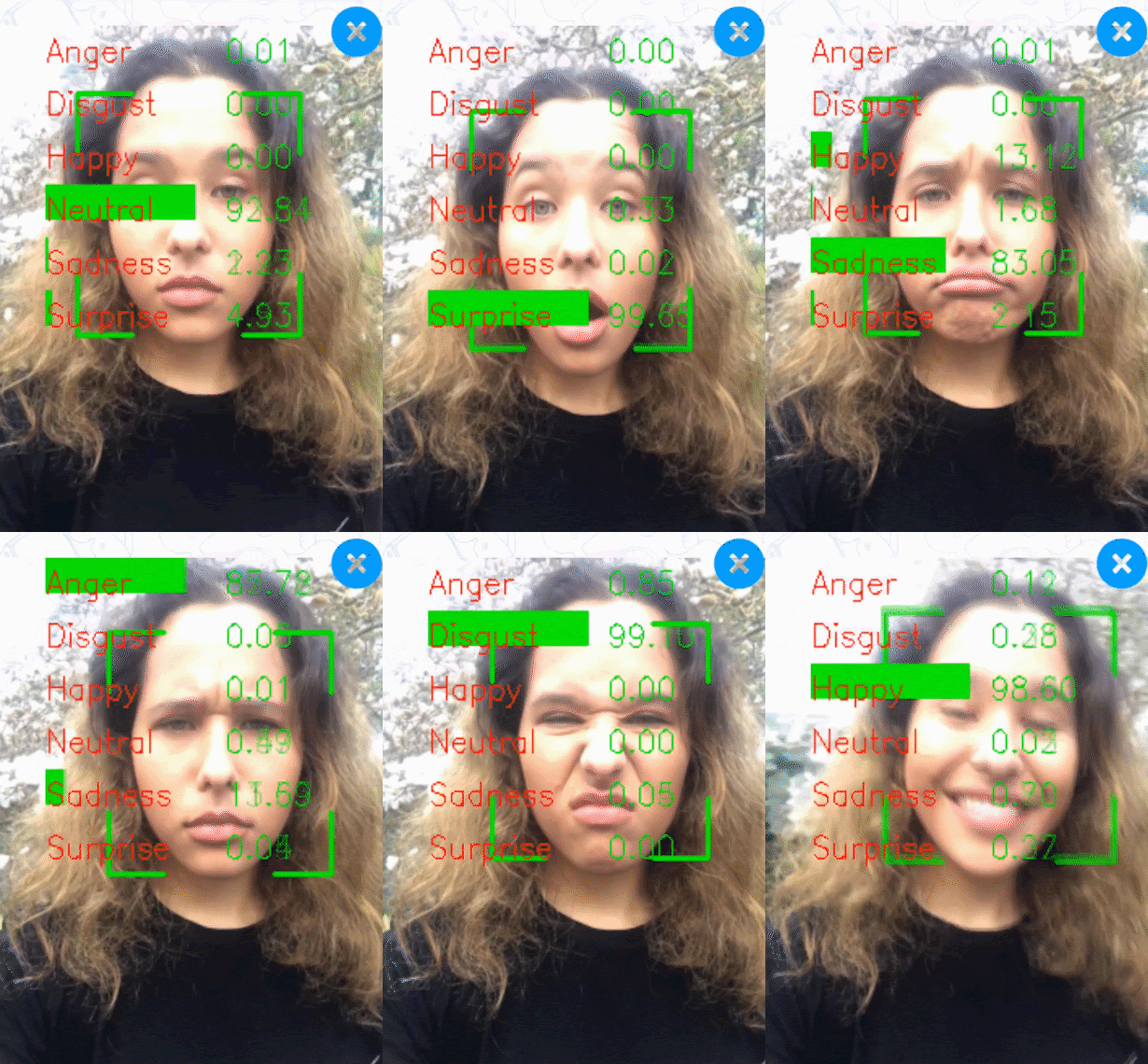
AI-based machine vision analyzed facial micro-expressions up to 15 times per second.
Other models looked at voice, cadence, pauses, body language, and subtle changes in facial color and oxygen saturation.
Combined with behavioral indicators, this created an individual emotional and behavioral profile over time - helping patients and practitioners see whether a therapy was actually helping.
“This was never about replacing humans.
It was about giving them better signals.”
Why this mattered
The stakes are high.
A UK study shows it takes an average of 13.4 years to correctly diagnose bipolar disorder.
Years of trial and error.
Unnecessary suffering.
This pattern repeats across mental health and contributes to roughly
800,000 suicides every year worldwide.
Despite thousands of mental health apps, very few are grounded in measurable data or clinical validation.
Human psychology is complex.
Messy.
Deeply personal.
This system was never designed to run on autopilot.
It was meant to do something more modest - and more necessary:
Help patients and loved ones stop guessing and start knowing -
a little more than yesterday.
Allforlife didn’t solve mental health.
And sustaining that level of research wasn’t financially viable long-term.
But it changed me.
It clarified what matters when stakes are real.
When decisions are emotional.
When guessing costs years - or lives.
That lesson still guides everything I work on today:
People don’t need more opinions.
They need better signals - early enough to matter.

Together with private German investors, I convinced my cardiologist, Dr. Arnold Baas, then Head of Cardiology at UCLA, to support a clinical study using a proprietary set of AI algorithms.
The goal was simple in principle, and hard in execution:
to explore whether subtle biomarkers in the human face and voice could be correlated with cardiovascular conditions documented in clinical patient files.
Using iPhone cameras and microphones, we recorded short facial videos from multiple angles and a simple, standardized set of spoken phrases.
The resulting data was analyzed at scale and correlated with existing medical records.
I personally ran the study. We enrolled 1,756 UCLA heart patients - the youngest was 18, the oldest 102, analyzed millions of data points, classified patterns, and searched for early indicators of cardiovascular disease.
Some correlations were promising. Others were inconclusive.
At the time, consumer camera and sensor technology simply wasn’t good enough to reliably capture the micro-signals required for clinical certainty.
The science was early - and so was the hardware.
But the lesson was clear and lasting:
The signals exist - detecting them reliably just requires the right tools, at the right time, with the right humility about what data can and cannot yet tell us.
When technology tries to see what medicine can’t yet measure.
Because I was a heart patient at UCLA myself, I had a very personal motivation to explore whether earlier signals could be detected - before symptoms become irreversible.
Other Achievements
Where everything I learned finally had a place to go.
The Vavida Journey
By the time I reached this point, one thing was clear to me.
None of the earlier chapters were isolated.
Not music.
Not data.
Not AI.
Not health.
They were all training.
After facing my own health challenges, the question stopped being what else could I build and became something quieter - and harder:
What is worth building now?

Vavida started as a family-run effort to turn lived experience into something useful - not just for me, but for others navigating high-stakes health decisions under pressure.
It wasn’t about products.
It wasn’t about scale.
It was about giving people better signals earlier - so fewer decisions are made too late, or in the dark.
Today, Vavida and Clockbusters are growing into something much larger than I ever expected.
That story is still being written - and it belongs elsewhere on this site.
What made everything else possible
Alongside my work as a music executive, I remained deeply involved on the creative side. I co-wrote and co-produced many songs, including SWEETBOX’s Everything’s Gonna Be Alright.
The single went on to sell more than 40 million copies worldwide.
The self-titled album SWEETBOX sold over one million copies in Japan alone.

Over more than fifteen years, we released multiple albums under the SWEETBOX brand, working with different recording artists and achieving commercial success across many countries.
There is an unusual story behind Everything’s Gonna Be Alright.
The song is based on the Air from Johann Sebastian Bach’s Orchestral Suite No. 3 in D major (BWV 1068), composed around **1730 in my hometown, Leipzig, during Bach’s time as Thomaskantor. The version widely known today as “Air on the G String” stems from an **1871 arrangement by August Wilhelmj, which later gave the piece its popular name. Bach’s original Air is among the most recognized works of Baroque music and has long been associated in Europe with solemn, reflective moments.
When we produced the track in 1997, we paired Bach’s composition with a hip-hop beat and chose a deliberately optimistic message, inspired by the simple reggae phrase “Everything’s gonna be alright.” The intention was to counterbalance the emotional weight of the original composition with something reassuring and human.
The song’s early reception was modest. Despite strong promotion and widespread radio airplay, it never reached the Top 10 of Germany’s sales charts.
Momentum shifted when I began licensing and promoting the record internationally. In France, NRJ placed the song into heavy rotation, and it quickly reached No. 1 on the French charts.
Around the same time, following the fatal accident of Princess Diana, the BBC and BBC Radio 1 heavily rotated Everything’s Gonna Be Alright in their playlists and broadcast coverage. As those programs were syndicated globally, the song traveled with them and resonated with millions of people during a moment of collective grief.
What followed was something no marketing plan could have predicted.
The song became most successful in Japan, where it won two Japanese Grammy Awards in 1998 (Best International Song and Best Newcomer), sold millions of copies, and eventually became one of the most frequently played wedding songs in the country.


